Lesson 3.1 - TCM Foundation
Learning Goals: By the end of this lesson you will be able to
1. Compare conventional and complementary approaches to health care in terms of the therapeutic
approaches used and the types of practitioners offering the services.
2. Compare conventional and complementary treatment methods for a variety of health care issues.
Success Criteria: By the end of this lesson you will be able to
1. Explain basic concepts in TCM such as yin yang, qi, meridians, and the five elements
Independent Work to Finish Before Class:
- Study the glossary + Do the glossary quiz
- Read the lesson article + Answer the questions at the end
- Post your notes from the reading in the homework forum
- Do the exit card
Homework Questions:- What is “yin yang” and how does it relate to health?
- What is “qi” and “blood” in TCM?
- What are acupoints and how can we use them for our health?
- What are the five elements and how do they relate to health?
- How do the five elements relate to our emotions?
Do this quiz when the teacher says so during class. This quiz counts for marks and can only be done once.
Put the glossary terms in your homework notes. Study them and then do the glossary quiz (without peeking at the answers).
Do this quiz to check that you've learned the key words for this lesson. This quiz does not count for your grade.
Post your homework answers here by 1 hour before class to get feedback from the teacher.
Do this survey to reflect on how the lesson went for you.
- Refer to the picture of the Five Elements from your reading.
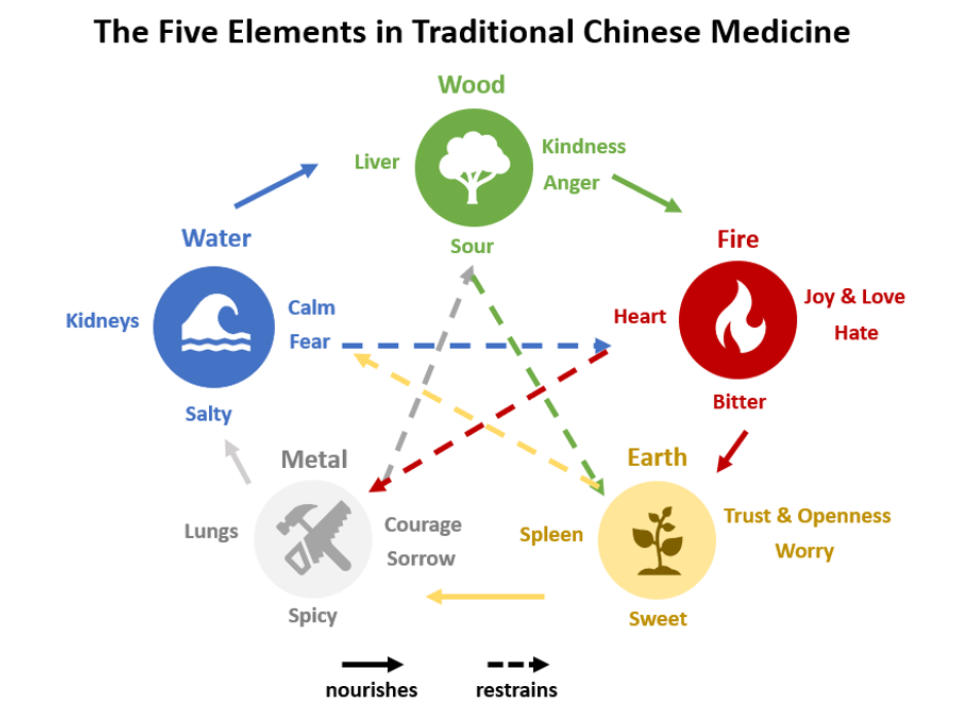 With your group, discuss these questions:
- Knowledge: For each element, list the associated flavor and emotions.
- Thinking: If someone eats too much salty food, predict what will happen to their health according to the Five Elements Framework.
- Communication and Application: Joe gets angry often, even at small things in life. He often craves sour food too. Explain to Joey how his anger and cravings for sour food are related. What should he do to reduce his anger according to TCM?