• Close
      Toggle search input

    [TEA-JAN-26] SCH4U b ...

    Close
    Toggle search input
    1. Courses
    2. [TEA-JAN-26] SCH4U by Mr. J. Vanasco (2025-26 T3)
    • Welcome to Grade 12 Chemistry SCH4U!
      •  Presentation Drop Box Assignment
      •  Announcements Forum
        • Class Schedule: Monday to Friday 8:45am - 12pm EST. 

        • Office hour: Every Friday 8 - 9 am EST. 
        • Teacher's email: 
        • For Tech support email Fan Wu: fanw@edu4u.ca
        • Moodle Maintenance: A reminder that every other Friday 5 pm - 11:59 pm (EST), Moodle is unavailable as it is undergoing maintenance. Ensure you have all the work you need downloaded or that you complete your tasks outside of this time

        Grade 11 Textbook: https://www.creativebookpublishing.ca/books/McGraw-Hill-Ryerson-Chemistry-11.pdf

        Grade 12 Textbook: https://www.creativebookpublishing.ca/books/Nelson-Chemistry-12.pdf

      •  SCH4U Course Outline File
    • COURSE ORIENTATION
      COURSE ORIENTATION
    • COURSE AGREEMENT
      COURSE AGREEMENT

      COURSE AGREEMENT

      Students must read and agree to the following procedures and policies before starting the course.

    • Unit 0 - Grade 11 Review (12 Hours)

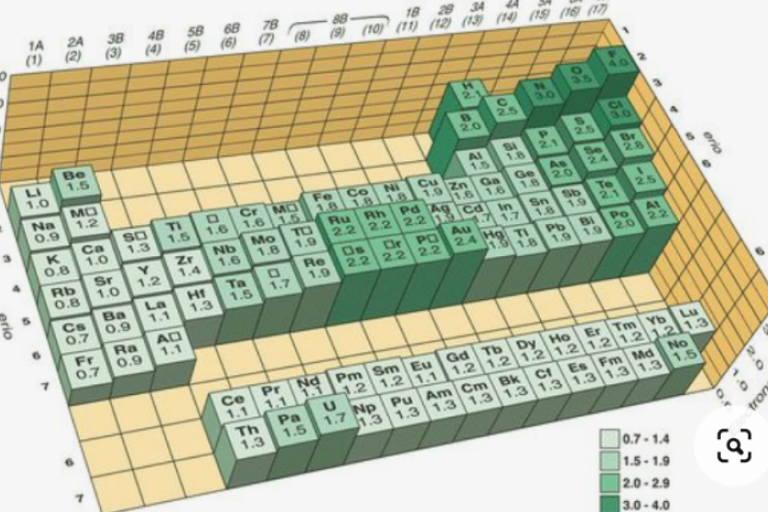
      We will spend two days on reviewing grade 11 chemistry, and the following concepts are expected to fully understand before we start grade 12 chemistry: Periodic trend, naming compounds, Lewis structure, types of reactions, and calculation involved in chemical reactions.
      Unit 0 - Grade 11 Review (12 Hours)
      Show more
    • Lesson 0.1 - Periodic Trend
      Lesson 0.1 - Periodic Trend
    • Lesson 0.2: Naming & Lewis Structure
      Lesson 0.2: Naming & Lewis Structure
    • Lesson 0.3: Type of Reactions
      Lesson 0.3: Type of Reactions

      Lesson 0.3: Type of Reactions

      Date: Mar 3, 2022 09:02 AM Eastern Time (US and Canada)Meeting Recording:https://edu4u.zoom.us/rec/share/5mQpJTOaTaqOaLPctpb0QLER7fHAx_-PsPokyPlaeevgm72zc91f6hBGsfvvD-NY.whriXIgIXzVBUuxrAccess Passcode: 3S.FDB&4

    • Lesson 0.4: Calculation Involved in Chemical Reaction
      Lesson 0.4: Calculation Involved in Chemical Reaction
    • Unit 1 - Structure and properties (24 hours)

      In this Unit, you will assess the benefits to society and evaluate the environmental impact of products and technologies that apply principles related to the structure and properties of matter; investigate the molecular shapes and physical properties of various types of matter; demonstrate an understanding of atomic structure and chemical bonding, and how they relate to the physical properties of ionic, molecular, covalent network, and metallic substances.
      Unit 1 - Structure and properties (24 hours)
      Show more
    • Lesson 1.1: Atomic models
      Lesson 1.1: Atomic models

      Lesson 1.1: Atomic models

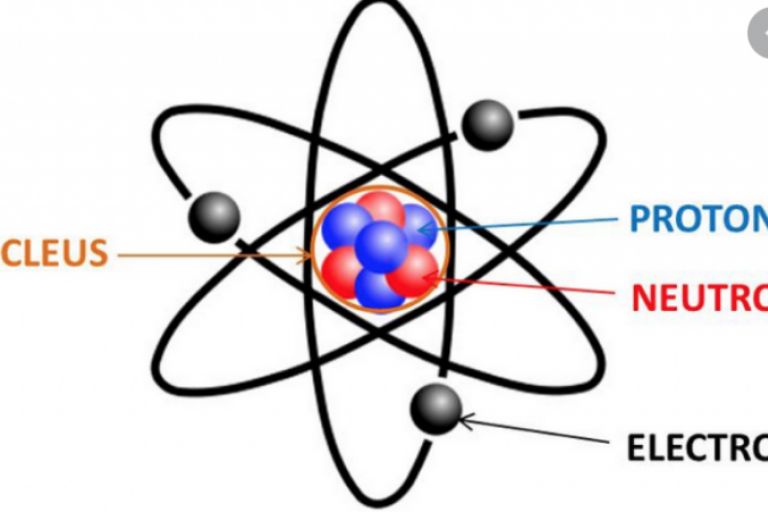
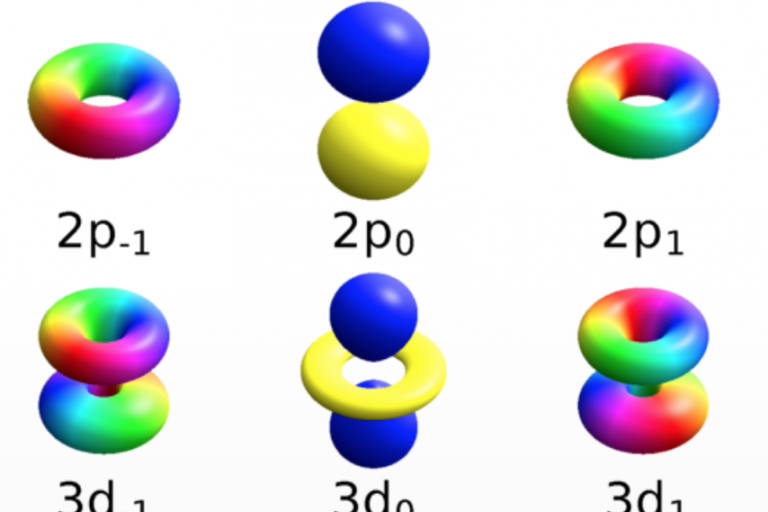
      Learning Goals: By the end of this lesson you will be able to1. Describe atomic structure and theory, including key experiments; 2. understand the basics of quantum mechanics, the wave model, quantum numbers, and electron configuration. 3. Define key terms: electron, radioactivity, nucleus, proton, neutron, isotopes, atomic number (Z), mass number (A), radioisotope, photoelectric effect, quantum, photon, spectroscopy, emission spectrum, continuous spectrum, line spectrum, transition, ground state.

    • Lesson 1.2 - Quantum numbers
      Lesson 1.2 - Quantum numbers
    • Lesson 1.3 - Chemical Bond and VSPER Theory
      Lesson 1.3 - Chemical Bond and VSPER Theory

      Lesson 1.3 - Chemical Bond and VSPER Theory

      Learning Goals: By the end of this lesson you will be able to1. relate the periodic table and atomic theory to bonding theories; 2. predict the type of bonding in a reaction product and describe the properties of the product that depend on bonding;3. define Key Terms: ionic bond, isoelectronic, covalent bond, bonding electron pair, Lewis structure, duet rule, octet rule, lone electron pair, simplified Lewis structure, space-filling model, coordinate covalent bond.

    • Lesson 1.4 - Bond and Molecular Polarity
      Lesson 1.4 - Bond and Molecular Polarity
    • Lesson 1.5 - Hybridization
      Lesson 1.5 - Hybridization
    • Lesson 1.6 - Intermolecular Forces
      Lesson 1.6 - Intermolecular Forces
    • Unit 2 - Energy Changes and Rate of Reactions (24 hours)

      n this Unit, you will analyze technologies and chemical processes that are based on energy changes, and evaluate them in terms of their efficiency and their effects on the environment; investigate and analyze energy changes and rates of reaction in physical and chemical processes, and solve related problems; demonstrate an understanding of energy changes and rates of reaction.
      Unit 2 - Energy Changes and Rate of Reactions (24 hours)
      Show more
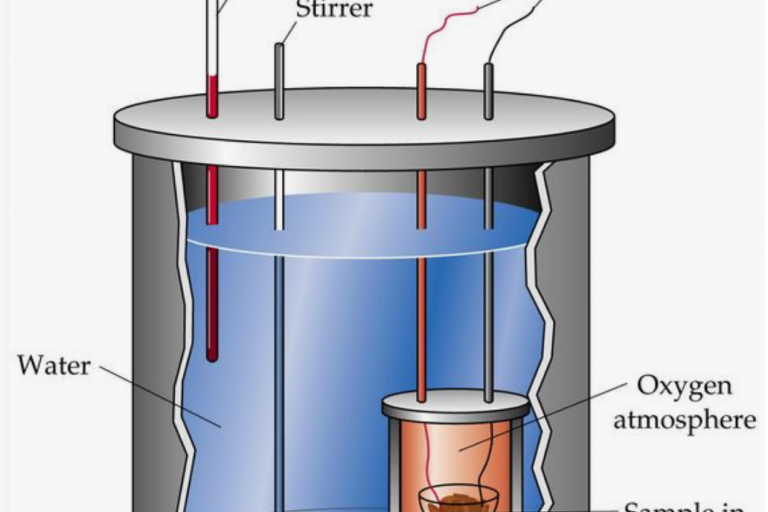
    • Lesson 2.1 - Calorimetry and Enthalpy
      Lesson 2.1 - Calorimetry and Enthalpy
    • Lesson 2.2: Bond Energy and Hess's Law
      Lesson 2.2: Bond Energy and Hess's Law
    • Lesson 2.3 - Standard Enthalpy of Formation
      Lesson 2.3 - Standard Enthalpy of Formation
    • Lesson 2.4 - Rate of Reactions
      Lesson 2.4 - Rate of Reactions
    • Lesson 2.5 - Collision Theory and Rate Law
      Lesson 2.5 - Collision Theory and Rate Law
    • Lesson 2.6 - Reaction Mechanisms
      Lesson 2.6 - Reaction Mechanisms
    • Unit 3 - Chemical Equilibrium (33 hours)

      GOALS: In this Unit, you will analyze chemical equilibrium processes, and assess their impact on biological, biochemical, and technological systems; investigate the qualitative and quantitative nature of chemical systems at equilibrium, and solve related problems; demonstrate an understanding of the concept of dynamic equilibrium and the variables that cause shifts in the equilibrium of chemical systems.
      Unit 3 - Chemical Equilibrium (33 hours)
      Show more
    • Lesson 3.1 - Equilibrium Law
      Lesson 3.1 - Equilibrium Law
    • Lesson 3.2 - Le Chatelier's Principle
      Lesson 3.2 - Le Chatelier's Principle
    • Lesson 3.3 - Solubility Equilibria
      Lesson 3.3 - Solubility Equilibria
    • Lesson 3.4 - Predicting Spontaneous Reaction
      Lesson 3.4 - Predicting Spontaneous Reaction
    • Lesson 3.5 - Introduction of Acids and Bases
      Lesson 3.5 - Introduction of Acids and Bases
    • Lesson 3.6 - Ka of mono- and polyprotic Acid
      Lesson 3.6 - Ka of mono- and polyprotic Acid
    • Lesson 3.7 - Kb of weak bases
      Lesson 3.7 - Kb of weak bases
    • Lesson 3.8 - Salt hydrolysis and Titration
      Lesson 3.8 - Salt hydrolysis and Titration
    • Lesson 3.9 - Buffer Solution
      Lesson 3.9 - Buffer Solution
    • Unit 4 - Electrochemistry (12 hours)

      In this Unit, you will analyze technologies and processes relating to electrochemistry, and their implications for society, health and safety, and the environment; investigate oxidation-reduction reactions using a galvanic cell, and analyze electrochemical reactions in qualitative and quantitative terms; demonstrate an understanding of the principles of oxidation-reduction reactions and the many practical applications of electrochemistry.
      Unit 4 -  Electrochemistry (12 hours)
      Show more
    • Lesson 4.1 - Predict Spontaneous REDOX reactions
      Lesson 4.1 - Predict Spontaneous REDOX reactions
    • Lesson 4.2 - Balance REDOX reaction
      Lesson 4.2 - Balance REDOX reaction
    • Review & Final Evaluation (8 hours)

      Review & Final Evaluation (8 hours)
      Show more
    Skip Search forums

    Search forums

    Advanced search
    Skip Upcoming events

    Upcoming events

    P2 Report Finalization (term 2)
    Tuesday, 24 February, 5:18 PM

    Withdraw from a Course Deadline (term 3)
    Wednesday, 25 February, 5:20 PM

    Last Day of Term 3 & Final Exam
    Thursday, 26 February, 5:20 PM

    PA Day
    Friday, 27 February, 12:20 AM

    Go to calendar...
    Skip Recent activity

    Recent activity

    Activity since Sunday, 15 February 2026, 1:18 AM
    Full report of recent activity...

    No recent activity

    Data retention summary