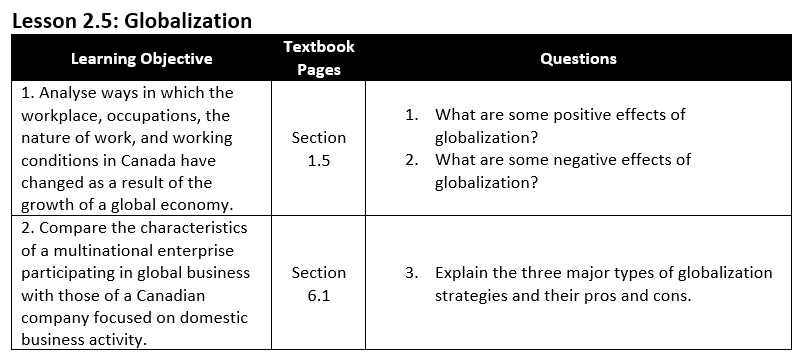
Lesson 2.5: Globalization
Learning Goals: By the end of this lesson you will be able to
Independent Work Before Class:
1.Textbook work: Sections 1.5 and 6.12.Glossary Quiz3.Exit Card4.Homework Forum Post5.Finish rough copy of Assignment 2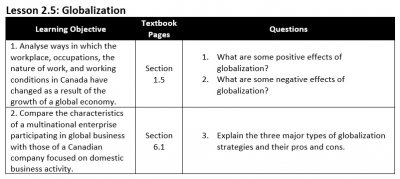
Do this quiz before class and after you study the glossary.
- Do this short survey after class to reflect on how class went for you.
Post your notes for Sections 1.5 and 6.1 here by 1 hour before class.
Also make sure to upload your rough copy of Assignment 2 on the Unit 2 Page so the teacher can give you feedback.
During Class:
- 1.How can businesses reduce foreign exchange risk?2.What is a famous global company that you know? What type of globalization strategy do you think they use?3.Do you think the pros of globalization outweigh the cons?
Make sure to discuss with your group and give good evidence for #3.
If we don't discuss and debate knowledge, we won't truly understand it.
理不辨不明 Do this quiz before class and after you do the textbook work.
Examples
1. Transnational Strategy Examples:
Procter & Gamble (P&G):
- P&G is known for its transnational approach, balancing global integration and local responsiveness.
- Standardizes core products globally while adapting marketing strategies to suit local cultural preferences.
- Achieves economies of scale through centralized R&D and global supply chain management.
Toyota:
- Toyota implements a transnational strategy by standardizing certain manufacturing processes globally.
- Customizes product offerings based on regional preferences and regulatory requirements.
- Efficiently integrates global supply chains to optimize production and distribution.
2. Multidomestic Strategy Examples:
McDonald's:
- McDonald's adopts a multidomestic strategy to cater to diverse cultural and culinary preferences.
- Offers region-specific menu items to suit local tastes.
- Adjusts marketing strategies and promotional activities based on local market conditions.
Marriott International:
- Marriott follows a multidomestic approach in the hotel industry.
- Adapts hotel designs, amenities, and services to align with local cultures and customer expectations.
- Empowers local management teams to make decisions based on specific market demands.